As a therapist, I understand the urge to always teach about trauma. We, however, cannot deny that our media has been so focused on trauma for so long that we are missing out on applauding the healing that is taking place. Yes, I will speak about how trauma moves within generations and how it can be stopped, but I want to celebrate a few things first.
- I want to celebrate how quickly Gen Z’s call out workplace harassment. Yes, they could make better employees. But, we also cannot deny how aware they are about why they work. They never feel the urge to stay in a corner because they fear there will be no other options. They are redefining what we call work — I love it!
- I want to celebrate how much Millennials are focused on healing. It might not be a lot where you live, but I am meeting more and more 90s babies who are ensuring they do not carry on their traumas into their romance and parenting journey. They are even becoming amazing business owners as well.
- I want to celebrate the Gen Xers for taking responsibility for how they could have done better. I am listening to some of them speak — it is obvious that they are retracing their steps. More importantly, how they are beginning to call out their contemporaries and seniors who have not stopped perpetrating some form of abuse since their younger days and the Boomers are not left out of this generational healing revolution going on.
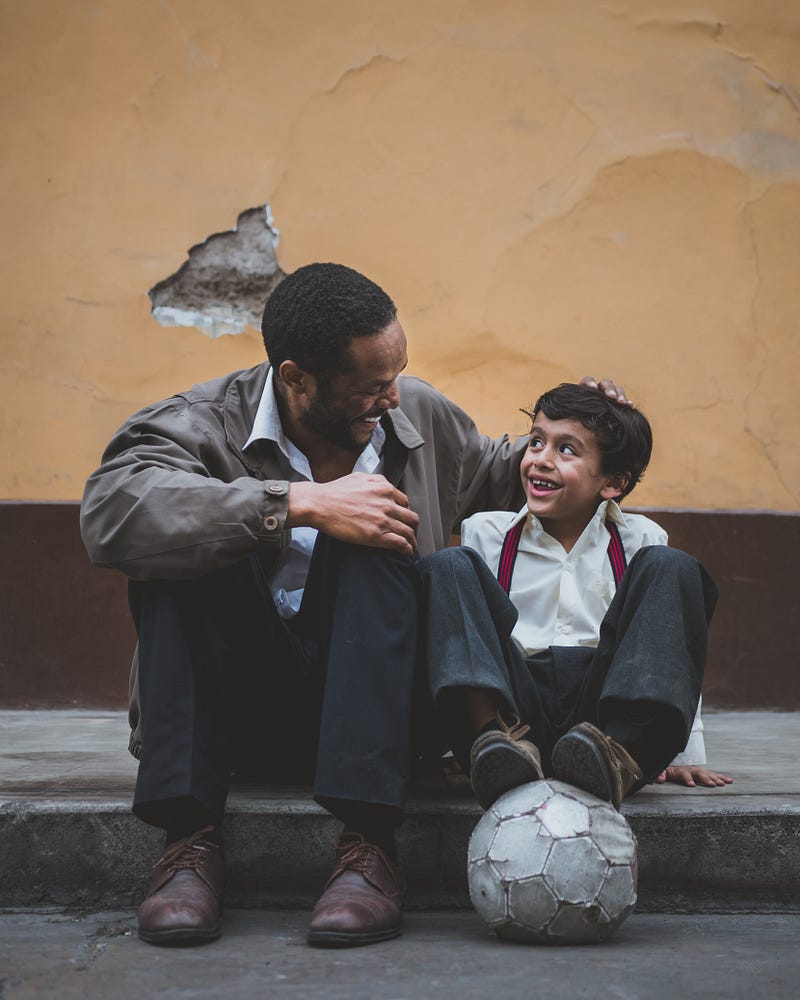
How Trauma Evolves Generationally
I define trauma as a one-off or serial negative experience that can alter your psyche, expectation and disposition to the world to the extent of taking your desire to live.
Trauma, like a virus, can reproduce itself and reproduce itself rapidly. It does not always reproduce itself in the same form, interestingly.
Let us say Filia lost her husband at the age of twenty-five and could not remarry easily because she had four kids with her late husband and did not have relatives to turn to. So, Filia begins to drink whenever she gets frustrated. A few years later, Filia is an Alcoholic. Her children do not automatically become Alcoholic because they think “Oh, that looks cool”.
The trauma was the death, the drinking was the coping mechanism and the addiction was the escalation (this happens because there was no changing of coping mechanism).
Filia might be short on her rent frequently making her children have to earn early to cover up for the vacant role (leader). The first child is likely to assume this role (if the first child decides to leave home or emotionally abdicate that role, it naturally falls on the next child).
Early labour exposes the children to more physical struggles their bodies are not prepared for and emotional responsibilities they do not have the intelligence for.
Her first child, Camson, begins to work as an apprentice with a Carpenter while the immediate younger sister, Carol and brother, Kimna, go to work for their neighbour who owns a car wash. The youngest, Nina, stays at home with the disgruntled Filia, every day.
Camson is tired from lifting more than his share so even though it is honest work, He has every reason to come home frustrated and tired. Carol the senior girl sees men bring different women in their cars to the car wash every day and begins to believe marriage must be terrible to have a lover who cheats or one who is amazing only to die prematurely leaving you to go mad and raise four children. Kimna decides he cannot keep working at a car wash or suffering like his older brother so he takes off with the street gang.
This story could go a thousand different ways but I chose to stay on the surface and avoid some major popular traumas. As safe as this second generation looks, let us see what becomes of them.
Camson becomes a serial business owner who swears on never being broke again but he is also a workaholic who never knows when to stop even though he is on the Forbes List of 40 under 40 Millionaire CEOs. Carol becomes a car wizard who can move anything on four wheels and the franchisee for three major car brands in her city. Kinma escaped the prison when his whole gang was arrested and he got himself together to manage his sister’s business whenever she travelled. Nina has just earned her PhD. Psychology (behavioural change and addiction studies)
Despite how rich He is, Camson has never missed a work meeting not even for his 15th marriage anniversary. Joey is beginning to think his daddy does not like that he was born and is beginning to slip into depression and experiment with the medicine cabinet so he can sleep better at night. Especially with his parents constantly talking to their lawyer lately.
Carol is considering breaking up her engagement again for the third time because Dave is just not right and she cannot place a finger on why that suddenly started happening — she could have sworn he was the one three months ago when he proposed.
This story is beginning to look like a Tyler Perry movie so I will stop but this is how trauma moves within generations — the coping mechanism of the last generation exposes their descendants to fresh trauma within and without that household.
Put together a collective of unhealed families in the same geographic location (digital location for some of us) and you will begin to have indirect traumas, absorbed traumas and more.
Healing Generational Trauma
Know the story: many of us are trying to fix generational problems we do not know about. We are trying to do better than parents whose experiences we do not take into account. So, even though we are doing everything within our power to heal like going to therapy and taking more chances, our rage towards them is not letting us see objectively.
Acknowledge the limitations: every generation stopped a certain type of trauma they had previously experienced or observed from spilling on the next generation (except the individuals were abusers, themselves).
We can castigate Filia all we want but we see her selling none of her children to a brothel. She knew her flaws and allowed them to work legally. Yes, she could have gotten over her grief but even in her failures, we can see where she drew a line in the sand.
Camson might have been a terrible father at being present but his son, Joey will never know what it means to sleep with an empty stomach not even if his parents were separated.
In judging our parents we do not pay attention to their limits at the time. What was the limit of their education, emotional intelligence, awareness, etc? If Filia had a senior friend who was a widow who did well in life, would Filia have learned early to prioritize her children? If Camson had one colleague who was wealthy but left contract meetings to go be with his kids, would Camson have adjusted? If Carol was surrounded by girlfriends who had great working relationships across different age groups, would her fear not be unfounded at her age?
Stop making excuses: what they did or did not do is not your excuse at age twenty as far as I am concerned.
Your ancestors failed, your parents, uncles, aunties… everyone failed and we agree. What you consciously do from today will be the foundation upon which your children begin.
What is the work required for you to heal? Find it and do it!
I hope this helped you see that your family tree does not have to be a tree of traumatized people.
If you have any questions or would like me to cover any topic, feel free to tell me anonymously.
Follow Me
Hi, reading this far means you like my writing. Follow me on Threads where I write the most.